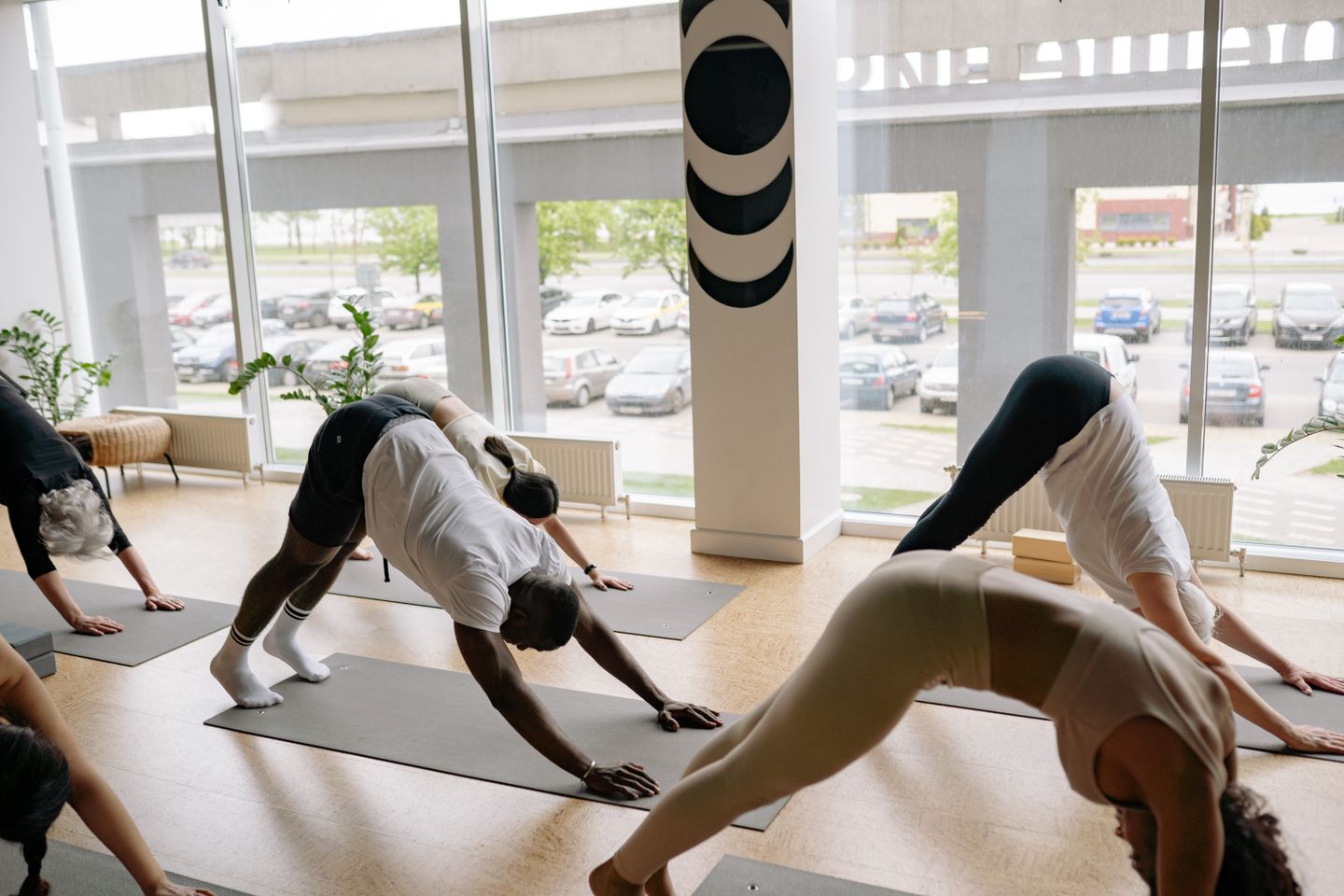
Look at what is available today
Stand in the room and notice its current arrangement. A chair may have moved, a window may be open, or the floor may hold items from another activity. Choose the usable space as it is today rather than relying on yesterday's setup.
Check where you can place your feet and hands without meeting furniture. Clear loose objects and make sure the route into the area remains open. A room used for several purposes benefits from this brief check each time you practice.
Choose light that lets you see
Notice whether bright sun falls directly into your eyes or makes part of the floor difficult to see. Move the mat, adjust a curtain, or turn on a room light if helpful. Pleasant daylight does not need to become a challenge.
Consider where you will look in your chosen movements. A position facing the window may work for sitting but feel less convenient for standing. Let the direction of the mat serve visibility and comfort instead of a preferred photograph of the space.
Check the ordinary room conditions
Choose clothing and ventilation for a comfortable temperature. Keep fans, heaters, and open windows arranged safely, without trailing cables across the practice area. You do not need to create a special climate to make a short home session feel intentional.
Notice whether the room will become busy soon. A shorter sequence or a different corner may be convenient. Keep doors and frequently used cupboards accessible so the setup can coexist with the other activities that happen in the room.
Match the session to the setting
If the space is broad and clear, choose familiar movements that use it comfortably. If it is narrow, keep the session seated or use a few modest standing actions. Adapt the sequence before starting so the room does not need constant monitoring.
Finish with a brief reset: return moved objects, roll the mat, and leave the floor clear. The room does not need to remain a practice space all day. Its usefulness comes from becoming available again with a few manageable actions.
A few common questions
Should my mat always face the same direction?
No. Change its direction when light, furniture, or the movements you choose make another arrangement more practical. A familiar orientation is optional, not a requirement.
What if I cannot clear a full mat area?
Use a stable chair or a clear standing spot for a shorter session. Choose movements with a modest footprint and avoid trying to fit a broad sequence into a narrow gap.
Published by the Lindluma journal.