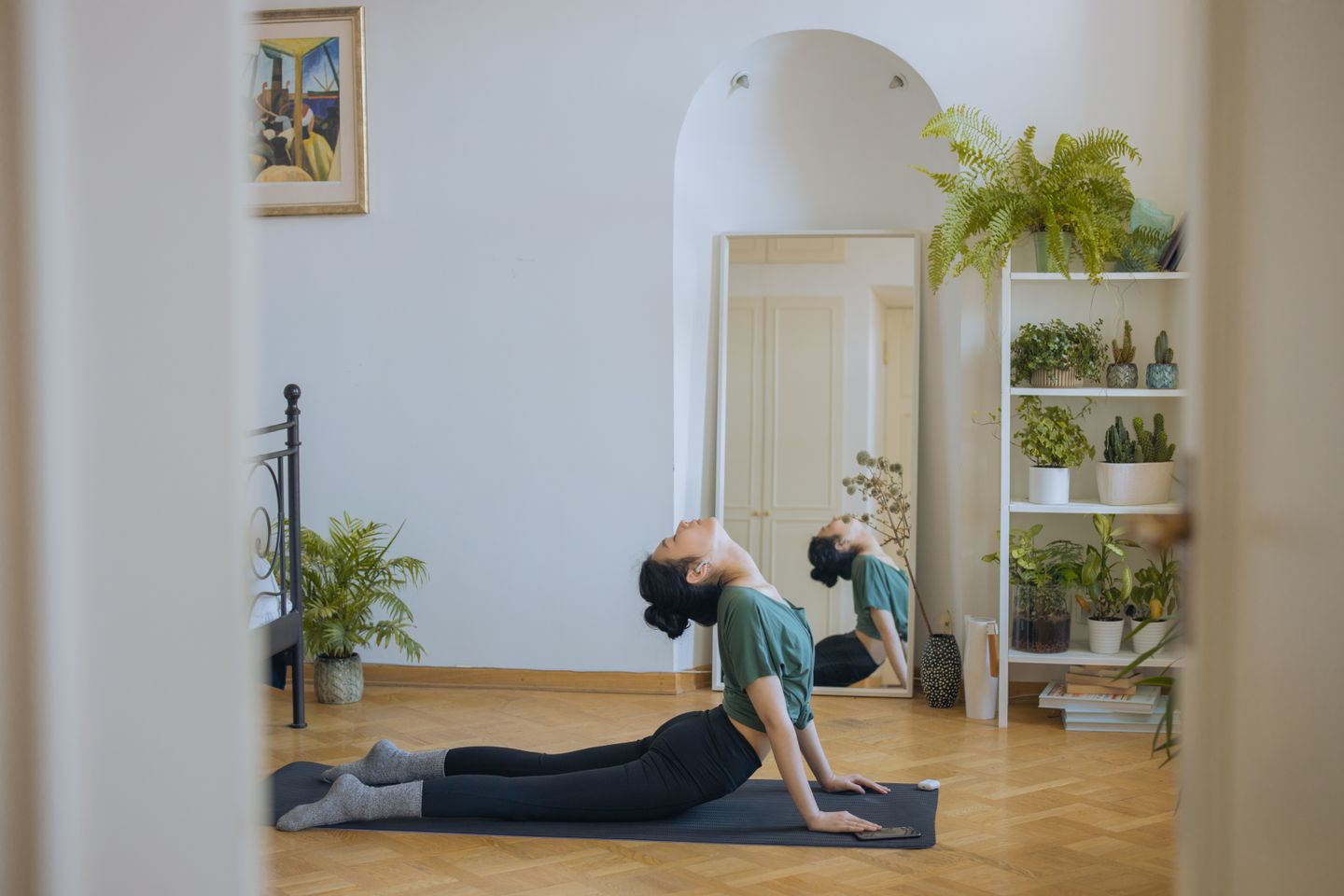
Choose a small portable set
Gather only what you regularly use: perhaps a mat, one folded support, and a short written guide. Keep them together in an accessible place. A compact set is easier to move than a collection designed for every possible practice.
Check that you can carry the items comfortably without blocking your view or catching a door frame. Make more than one trip if useful. Portability should make the setup easier, rather than turning the move into an extra challenge.
Check the new room afresh
A different room brings different floor surfaces, furniture, and walking routes. Unroll the mat only after checking the area. Make sure it lies flat and remains stable for the modest movements you plan to use.
Look above as well as around the mat. Low shelves and lamps may interrupt an arm reach even when the floor looks clear. Keep doors usable and avoid placing equipment where someone needs to step over it.
Carry the idea, not every detail
Use a familiar structure, such as an opening pause, two easy movements, and a clear finish. The exact positions can change. A room with less floor space may suit a seated session instead of a broad standing sequence.
Choose a stable chair only when one is available and suitable. Do not substitute lightweight furniture simply because you used support in the previous room. Let the current space determine which options are practical.
Reset after each session
Put the items back together when you finish and leave the room clear. This makes the next move straightforward and keeps shared areas useful. You can return to the usual storage place even when the practice location changes from day to day.
Over time, notice which rooms suit different situations. One may work during daylight, another when the home is busy. Keep a few usable options in mind without turning every room into a permanent yoga area. A portable routine can remain ordinary and uncomplicated.
A few common questions
Does every room need the same setup?
No. Use the space and suitable supports available in each room. The routine can keep a familiar order while changing positions or duration to fit the setting.
What if a room has no suitable chair?
Leave out movements that require one. Choose a familiar unsupported option that is comfortable for you, or move to a room with dependable support instead of using unstable furniture.
Published by the Lindluma journal.